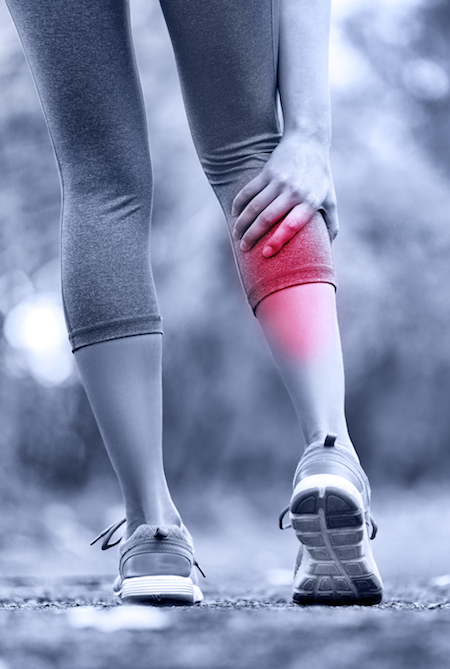
Calf pain can be a common issue for anyone who is on their feet for long periods of the day. Sudden, sharp pain from the calf muscle when running/walking; and then pain when weight-bearing is most commonly a muscle strain or spasm. It can be classed as an overuse injury and is normally caused by an increase in the volume or intensity of activity. Changes in activity/footwear or weakness/tightness in the foot and calf muscles can also increase injury risk
Calf Tear vs Calf Strain
A calf muscle or achilles tendon ‘tear’ involves a large degree of disruption in muscle or tendon fibres. Depending on severity First Aid (P.O.L.I.C.E. protocol) is the most appropriate initial treatment. Amount of pain is a good indicator of amount of damage. A complete muscle or Achilles tendon rupture (extreme pain and an inability to point the toes or lift heel) can occur without warning. It will need immediate immobilisation and referral to a doctor.
A calf ‘strain’ is mild – moderate muscle fibre disruption to the calf muscle(s). Treatment should be as the ‘POLICE’ protocol, read NHS advice here. A ‘sprain’ normally relates to a tendon injury. An achilies tendon strain should be treated as below.
Calf Pain Recovery
Timeline to full recovery is dependent on degree of injury and treatment. Six to ten weeks is normal for a muscle tear or chronic tendinosis injury. A muscle strain with no complication should normally resolve in 2-4 weeks.
A program of pain-free calf stretching and strengthening should be started after the initial symptoms of a muscle strain settle down. Deep tissue massage can speed up recovery. A calf muscle injury taking a long time to heal or keep reoccurring, can indicate a chronic, biomechnical issue. A more detailed sports therapy assessment is needed to diagnose, treat and design a treatment plan. For an assessment of your calf injury near Marlow book in to see Mark Skoyles BSc today here.
Achilles Pain
Pain and tenderness to touch on the Achilles tendon is an over-use injury. It’s can be called Achilles Tendinitis or Achilles Tendinosis but the treatment is very similar.
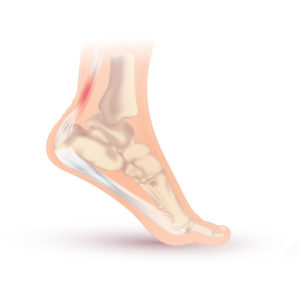
Blood supply into the micro fibres within the Achilles tendon is relatively poor. So once damaged they can be slow to repair. Studies have shown tensile (stretching) forces help stimulate optimal growth and repair of tendon fibres. The best calf strengthen exercises use a combination of isometric and eccentric loads. All exercises need to be progressive. Give the tendon time to get stronger. It can’t be rushed or skipped!
Achilles Pain Treatment
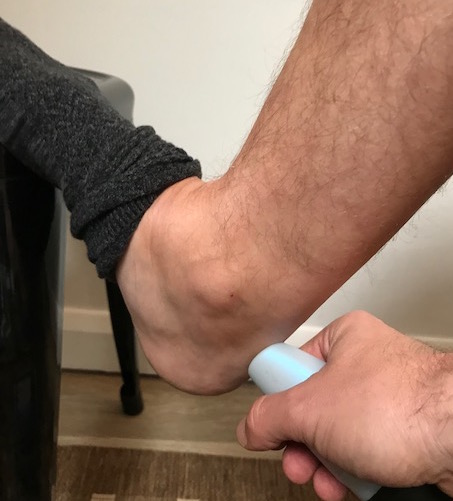
One remedy I do recommend for Achilles pain is icing the tendon on a stretch after exercise or when warm (see photo below). Applying ice directly to the skin around the tendon produces an analgesic effect. Meanwhile, the tension from the stretch accelerates the optimum healing effect on the tendon. Keep the ice in a suitable holder and move up and down the tendon. This prevents an ‘ice-burn’. If this doesn’t work (or makes the pain worse) then your Achilles pain is probably not tendonitis. It’s more than likely referred from the calf. In this case a deep tissue massage of the calves would probably be the best treatment.
CASE STUDY Mike was a regular marathon runner and he had entered the Marathon des Sables. It was just 3 weeks before the race. 156 miles across the Sahara Desert! He came to our clinic with niggling Achilles pain in his right leg. Increasing his mileage had made it worse and he was worried he may have to pull out the race. He started our calf stretching program and managed to complete the race. “I did the stretches every night during the race as well. I didn’t have a problem – it was brilliant!”.
Mild chronic or recurring pain can be a sign of muscle contracture or trigger points in the calf. Perform calf stretches at least twice a day if not painful. A structured treatment and exercise program for weak calves should be implemented. Contact us today for more information.
Other common causes of Calf Pain
Pain at the top of the heel in children could be Sever’s disease. Calf pain can also be referral pain from the spine. Stress fractures, compartment syndrome or neuro-vascular compression are other possibilities. Constant calf pain (even when resting) needs medical attention to rule out serious injury. It could be DVT.

 Enter your name and email and request our free ebook: 7 Habits of Highly Effective Runners